Let me help you discover your full potential





Workout and nutrition
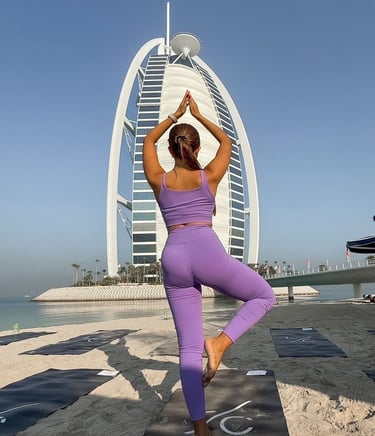
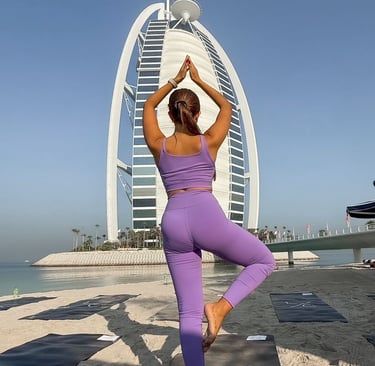
Habibi, if you dedicate yourself full time to belly dancing—whether it's dancing on stage every day or teaching classes nonstop—your body needs you to take good care of it. Here in Dubai, or anywhere else where the pace is intense, it's not enough to just “dance a lot.” You need specific exercises to strengthen yourself (walking, light weights, yoga, or Pilates for core strength and flexibility) and a diet that gives you energy without making you bloated.
In Argentina, this is often overlooked, but the truth is that if you don't have a basic routine of movement and mindful eating, your body will suffer: you'll get tired more easily, injure yourself more easily, or lose motivation. It's not magic, it's consistency. And if you're in another country, with changes in schedule and climate, even more so.
The things nobody tells you about being a full-time dancer and coach
When you first arrive to work here, your body changes a lot at first. You lose weight quickly because the pace is different: you dance every day, you sweat a lot, the heat burns extra calories, and the food changes. Water, the dry climate, and daylight saving time also have an influence... all together. Some girls see it as “necessary” to fit into the Middle Eastern aesthetic market, and yes, there are demands, but many also end up doing artificial things (surgery or extreme diets) because they believe it's the only way. I had to adjust my diet and routine so I wouldn't lose too much weight, but the important thing is to listen to your body: if you lose energy or feel bad, it's not ‘normal’. It's a sign that you need to find balance, not push yourself too hard.
Body changes after arriving in the Middle East
What happened to me (and to many others)
The climate and culture shock
The first summer in the desert is tough, habibis. The temperatures are extremely high, and the Argentine body is not used to it. Dancing outdoors is rare (it hardly ever happens in summer), but the heat affects everything: you dehydrate faster, you get tired sooner, and even your mood changes. Afterwards, the body adapts, but every summer I struggle a little at first.
The same goes for culture shock: the pace of life, the food, the water, everything is different. If you don't take care of your rest, hydration, and mind (meditate for a while, disconnect from your cell phone, talk to friends), you burn out. That's why for me, self-care isn't a luxury, it's survival: sleeping well, moving without obsession, eating what nourishes me, and giving myself space to breathe.


H2O
+Rest
Sleeping well is key.
Full hydration.
How I adapted without going crazy

Taking care of myself is not a luxury, it is a necessity in order to give my best in every performance and every class. I invite you to explore your own path to wellness, to listen to your body, and to nourish your soul. A strong and happy dancer is a dancer who inspires!
- Denise Simon
The SIBO Experience


Why self-care isn't optional
Let me tell you something personal: a while ago, I had SIBO (small intestinal bacterial overgrowth), which is an imbalance of bacteria in the intestine that leaves you bloated, without energy, and with your digestion in shambles.
The treatment (antibiotics, strict diet) greatly disrupted my routine: I lost strength, felt tired all the time, and even dancing was difficult. I realized that if I didn't take care of my body, mind, and spirit holistically, nothing worked. Now I prioritize rest, hydration, eating foods that make me feel good, and moving without pushing myself too hard.
It's not that I'm perfect, but I do know that if I don't take care of myself on all three levels—physical, emotional, and spiritual—I can't give my best on stage or in class. So, habibis, whether you're just starting out or already a pro, don't wait for your body to cry out for help. Taking care of ourselves is what allows us to keep dancing with love for a long time. 💜🧘♀️